Cinematographer

Stefano
Palombi

Feature Film · TV Series · Documentary · Commercial

Scroll

Selected
Works

Showreel Archive
2011–2012

Showreel 2011–2012

Feature Film · TV Series · Documentary

2004–2007

Showreel 2004–2007

Feature Film · TV Series · Documentary

1999–2003

Showreel 1999–2003

Feature Film · TV Series · Documentary

Stefano Palombi

Form and Other Experiences

Stefano Palombi's path began with a classical scientific education at the Liceo Scientifico A. Avogadro in Rome, followed by studies in Philosophy and Literature at La Sapienza — a humanistic foundation that would shape his visual sensibility throughout his career.

In 1999 he formalized his craft with a degree in Direction of Photography and Camera Operation at the Nuova Università del Cinema e della Televisione in Rome, studying under F. Di Giacomo, L. Verga and T. Ben Abdallah.

His commitment to the discipline extended into teaching: between 2005 and 2008 he led courses in Direction of Photography and Videomaking for Regione Marche, Università La Sapienza and Università Roma Tre, as well as for the laboratory of composer and musician V. Nocenzi.

From 2008 to 2019 he served as Technical Director and Partner at Rio Film, a production company that received the David di Donatello 2011 for Best Italian Short Film with Jodie e le Giostre.

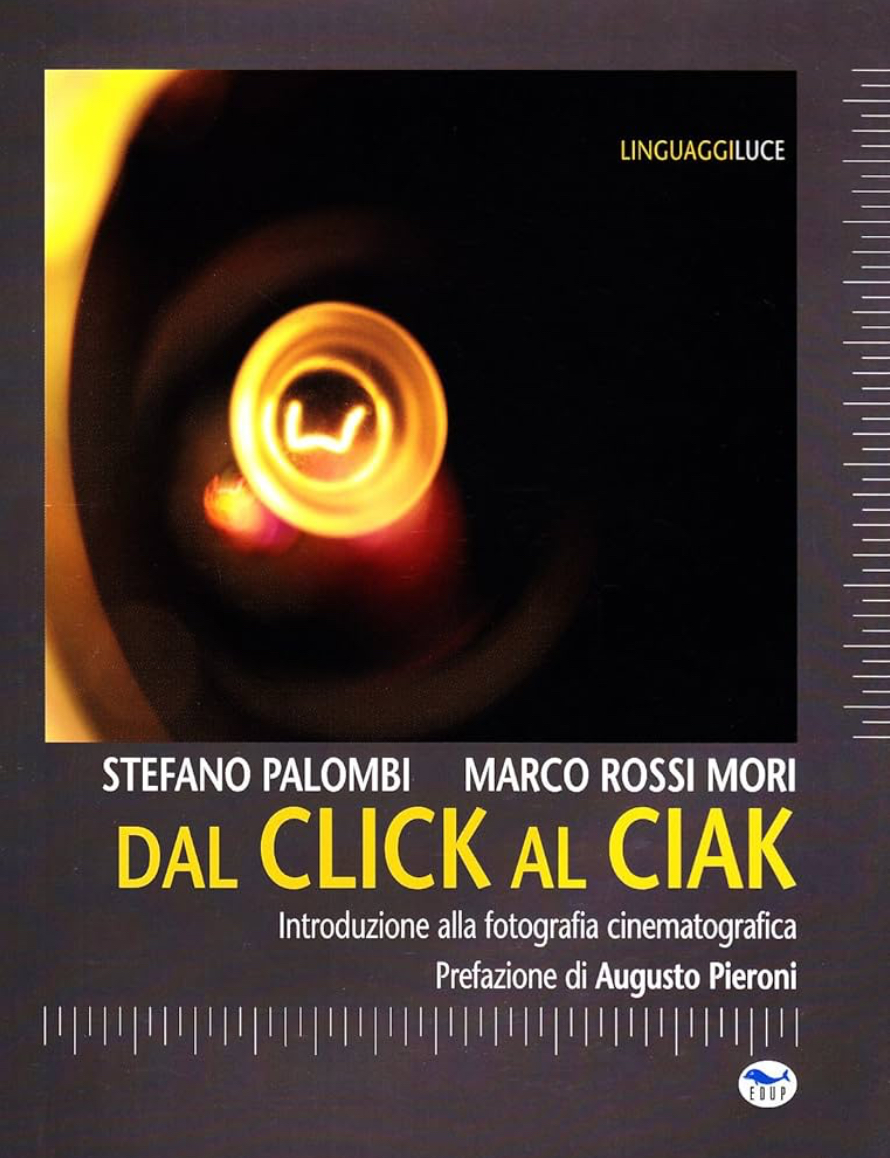
In 2009, together with M. Rossi Mori, he co-authored Dal click al ciak. Introduzione alla fotografia cinematografica, published by EDUP.

XXVII Premio Internazionale della Fotografia Cinematografica
"Gianni Di Venanzo" — Premio Speciale "Peppe Berardini"
Autore della Fotografia Fiction TV
27
Years of experience
Collettivo Chiaroscuro
Di Venanzo Award
Dal Click al Ciak

Dal Click al Ciak

Introduzione alla fotografia cinematografica

S. Palombi · M. Rossi Mori — EdUP, LinguaggiLuce · 144 pp.
Preface by Augusto Pieroni

This book addresses two needs: to offer an overview of how moving images are created and read, and to build a deeper awareness of the codes of a communication form as ubiquitous as it is complex. Whether we know it or not, whether we like it or not, we use these codes every day. Networked computers, digital television, even the phones in our pockets are quietly reshaping the boundaries between authors and audiences. Our aim is to open new questions for both roles — encouraging a conscious engagement with the vast expressive potential of audiovisual culture, at the intersection of languages rooted in photography itself.

Let's talk
about your project